Most businesses swear they are doing multichannel lead generation. Look closer, and they are just firing the same message at email and LinkedIn, then scratching their heads when nobody replies. Running a handful of channels isn't a strategy. Getting them to actually work together is, and that is what separates being easy to ignore from keeping new clients coming in.
This walks through what multichannel really means and why one channel is almost never enough, then 9 strategies for running it to turn those visitors into actual clients without burning out.
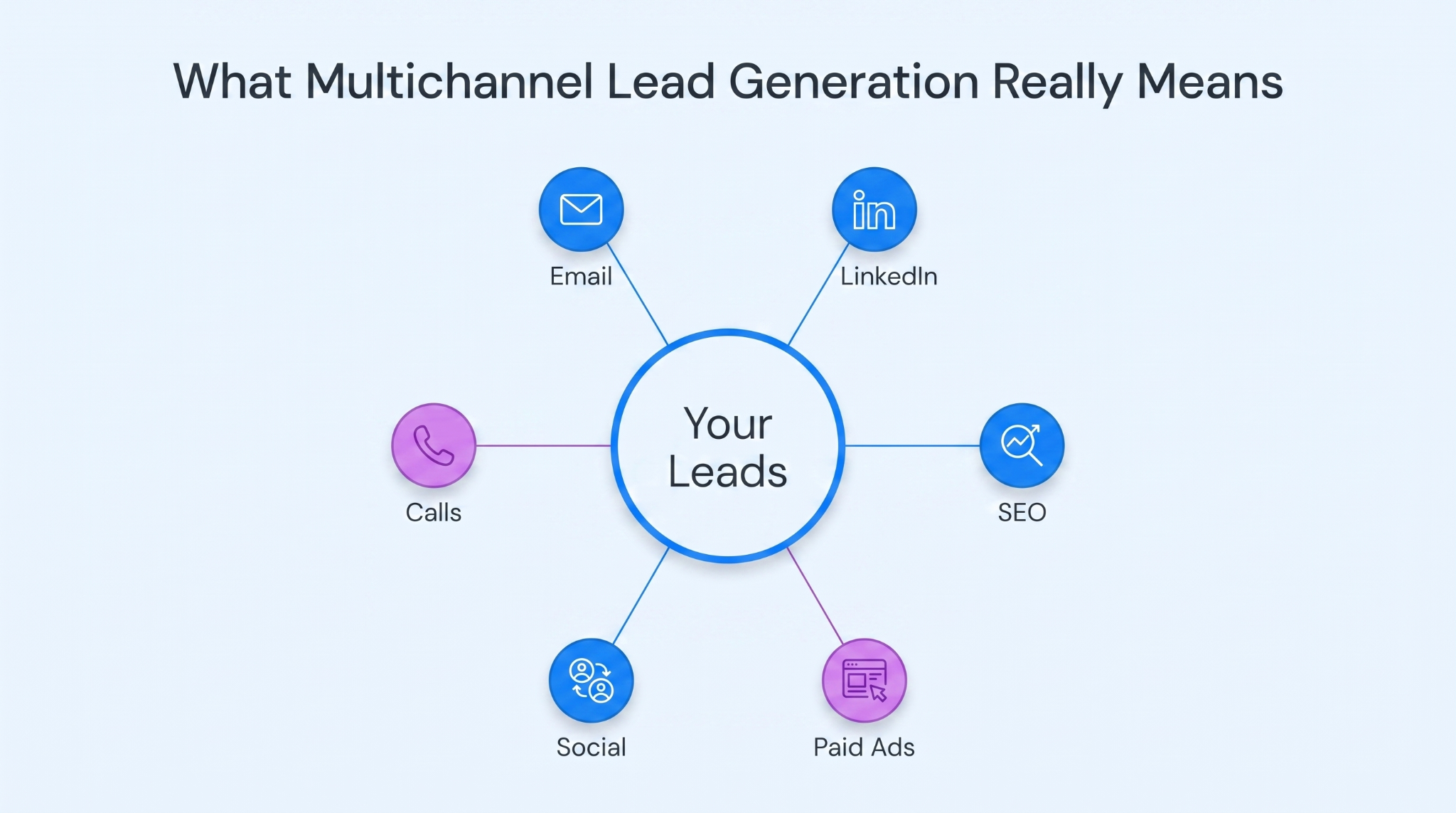
Multichannel lead generation is just using more than one channel to find and win high-quality leads, on purpose, in a way that is actually coordinated. It is about showing up where your buyers already are… with the right message that fits the place.
One channel rarely does the job because nobody sticks to a single platform. Someone sees your LinkedIn post, ignores your first email, then books a call weeks later off a retargeting ad. Skip any of those moments, and they drift off to whoever kept turning up.
And it genuinely pays off. Omnisend found that brands running 3 or more channels get 250% more engagement than the single-channel crowd. The more places you show up, the more likely people are to remember you.
You don't need all of these. You need the 2 or 3 effective channels your buyers use. Here's what each one is good for, so you can build a smart mix.
| Channel | Best For | Effort | Speed To Results |
| Cold Email | Direct coordinated outreach at scale | Medium | Fast |
| Search Engine Optimization & Content Creation | Inbound demand that compounds | High | Slow |
| | B2B relationships and warm intros | Medium | Medium |
| Paid Ads | Instant reach and retargeting | Medium | Fast |
| Cold Calling | High-intent, direct conversations | High | Fast |
| Social Media | Awareness and trust over time | Medium | Slow |
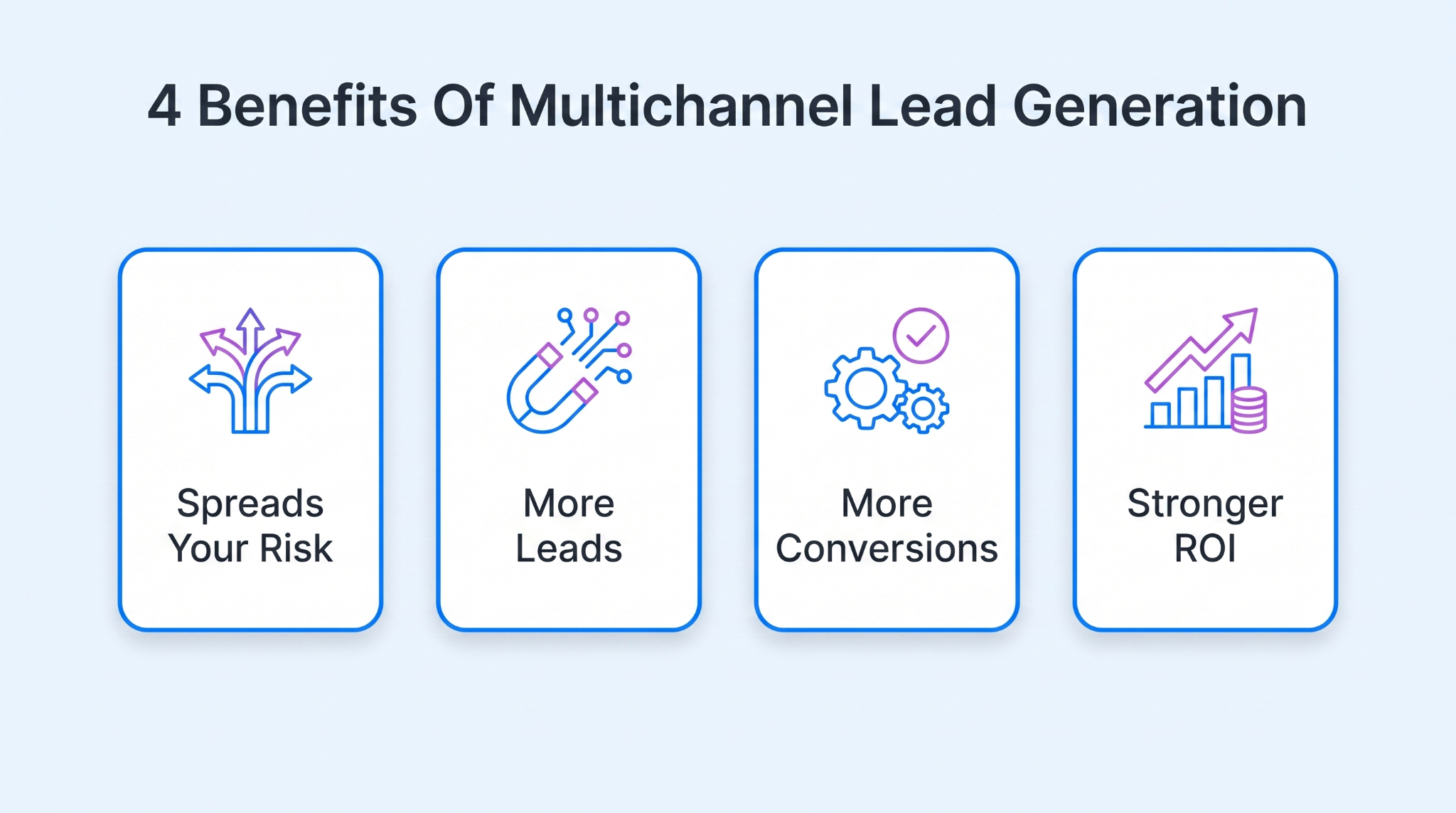
Before we get into the how, it is worth knowing why multiple channels are worth the hassle. These four are the reason single-channel teams keep smacking into a ceiling they can't quite explain.
Betting everything on one channel assumes it will keep working forever. It won't. An algorithm shifts or your emails start hitting spam, and your only source of leads vanishes with zero warning. Spread across various channels, and a rough month in one place barely leaves a mark.
You can see it in the retention numbers. Brands with solid multichannel engagement keep 89% of their customers, mostly because they aren't at the mercy of one platform's mood swings.
This part is just arithmetic. Every channel has its own pool of people, and those pools barely overlap. The crowd on your LinkedIn isn't the same one reading your blog or clicking your ads. Add a channel, and you reach a fresh group of customers you couldn't before, so your total lead count goes up.
More leads is only half the win. Multichannel also hands each lead more chances to say yes. Almost nobody buys on the first touch… or the third. Every channel you add is one more reminder, one more push that finally tips a hesitant buyer into replying.
Paid gets you speed but eats your budget alive. Organic is slow off the mark but close to free once it gets going. Go all paid, and your cost per lead stays painful. Go all organic, and you are waiting forever. Balancing them keeps your cost per client sane while the sales pipeline stays full.
A study puts the difference at 30% higher lifetime ROI for multichannel over single-channel. It also saves the money and hours you would otherwise plow into one pricey sales funnel, time that is usually better spent chasing leads.

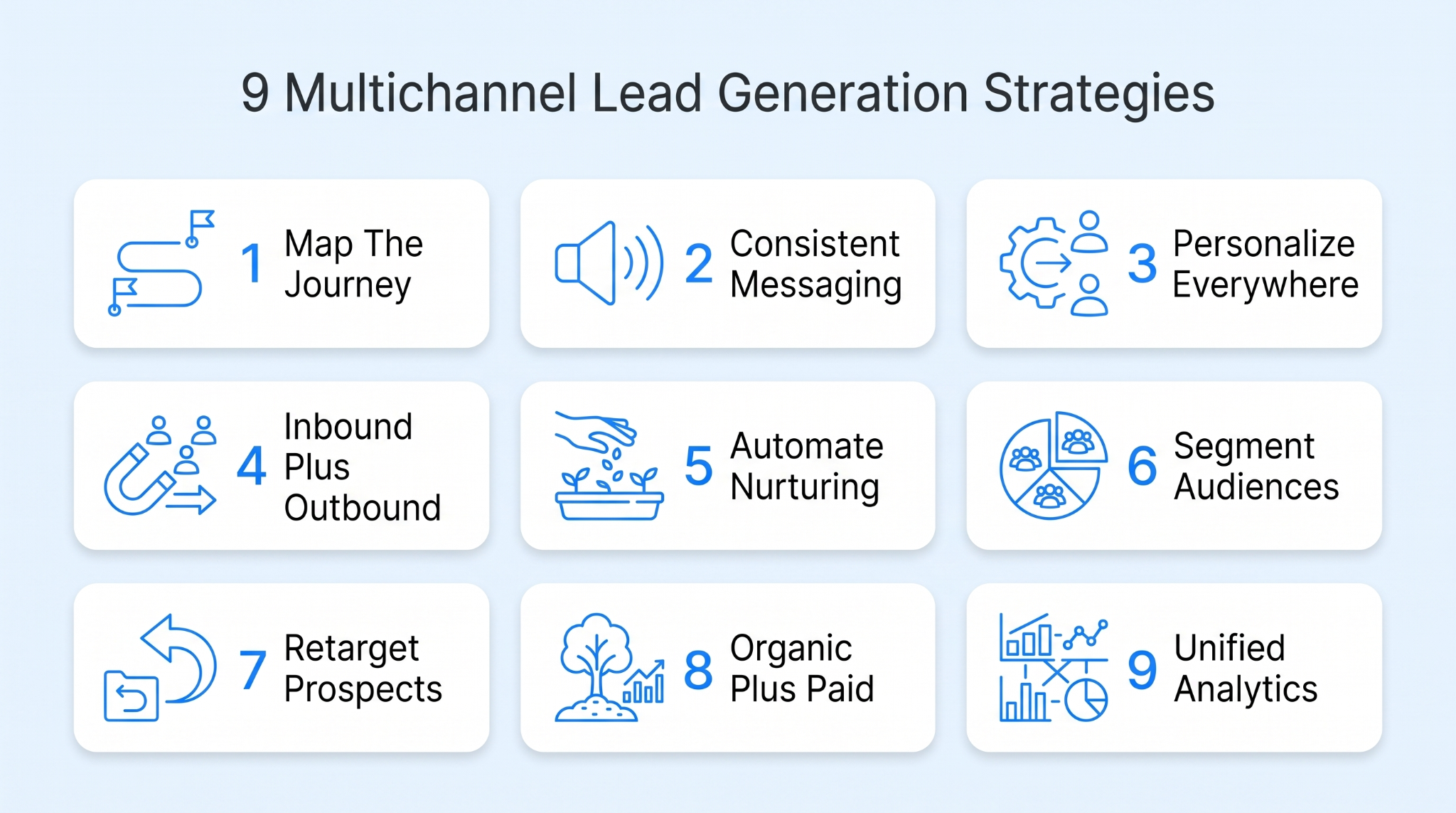
Right, the part you actually came for. Each of these 9 multichannel lead generation strategies fixes a different piece, so work through them in order instead of picking favorites.
Your buyer doesn't walk a straight line to you. They wander between channels, go dark for a couple of weeks, then show up somewhere totally different. If you don't know which channels they touch and when, you will pitch hard while they are still just browsing, or go quiet right when they are finally ready to talk.
Sketch the stages a buyer moves through, from first spark to signed deal
Note which channels your buyers actually use at each stage of that journey
Match each piece of content to the buyer stage – not the channel
Flag the exact moment leads usually go quiet and plan a bridge
More channels can multiply your reach, but they can just as easily splinter your story. If your LinkedIn messages and your cold emails promise two different things, anyone who sees both will be confused about who you even are. Consistency is what makes multiple touches one brand instead of a stranger.
Write one core value proposition and repeat it everywhere, in different words
Keep your tone and your core offer aligned across every channel you use
Build a simple messaging guide so every sales rep says the same thing
Audit every channel each quarter to find messaging that is out of sync
Consistency becomes everything in businesses built on trust and expertise. People are really buying your credibility when you ask them to hand over something high-stakes. And credibility is fragile.
Sound like a seasoned authority in one place and a generic vendor in another, and the doubt creeps straight in. People notice the seams. And one off-note is enough to make a cautious buyer look elsewhere.
Look at this MXDR solution overview by CyberProof. It speaks in precise, deeply technical language, the exact register a security committee expects from a real authority. Whether it is explaining how it maps threats or where humans step in over automation, the tone never wavers.
Now picture that same firm sounding sharp and expert on its site, then firing off a breezy, marketing-heavy cold email. The mismatch is jarring. A buyer who felt reassured by the website suddenly wonders which version is the real one.
In security, that flicker of doubt is fatal. Hold the same expert tone on every channel and the trust holds. Break it anywhere, and you hand the deal to whoever sounded more sure of themselves. It matters most wherever you are really selling expertise itself.
Consistent doesn't mean identical. Your core message holds, sure, but a blast that reads like it was written for nobody gets ignored on every channel at once. People reply when a message obviously knows who they are and why you are bothering them right now. A generic outreach sequence is just polite spam with your logo on top.
Doing that at scale comes down to the data behind it. Digging up the right details is exactly what tools like Anyleads are built for. Feed in someone's role or a recent trigger, and your message can point to something real instead of a mail-merge first name.
Merge in real details like someone's role or a recent company event
Reference something specific each prospect actually did before you ask them for anything
Match your message format to whatever feels native on each separate channel
Use dynamic fields so every send still feels one-to-one at real scale
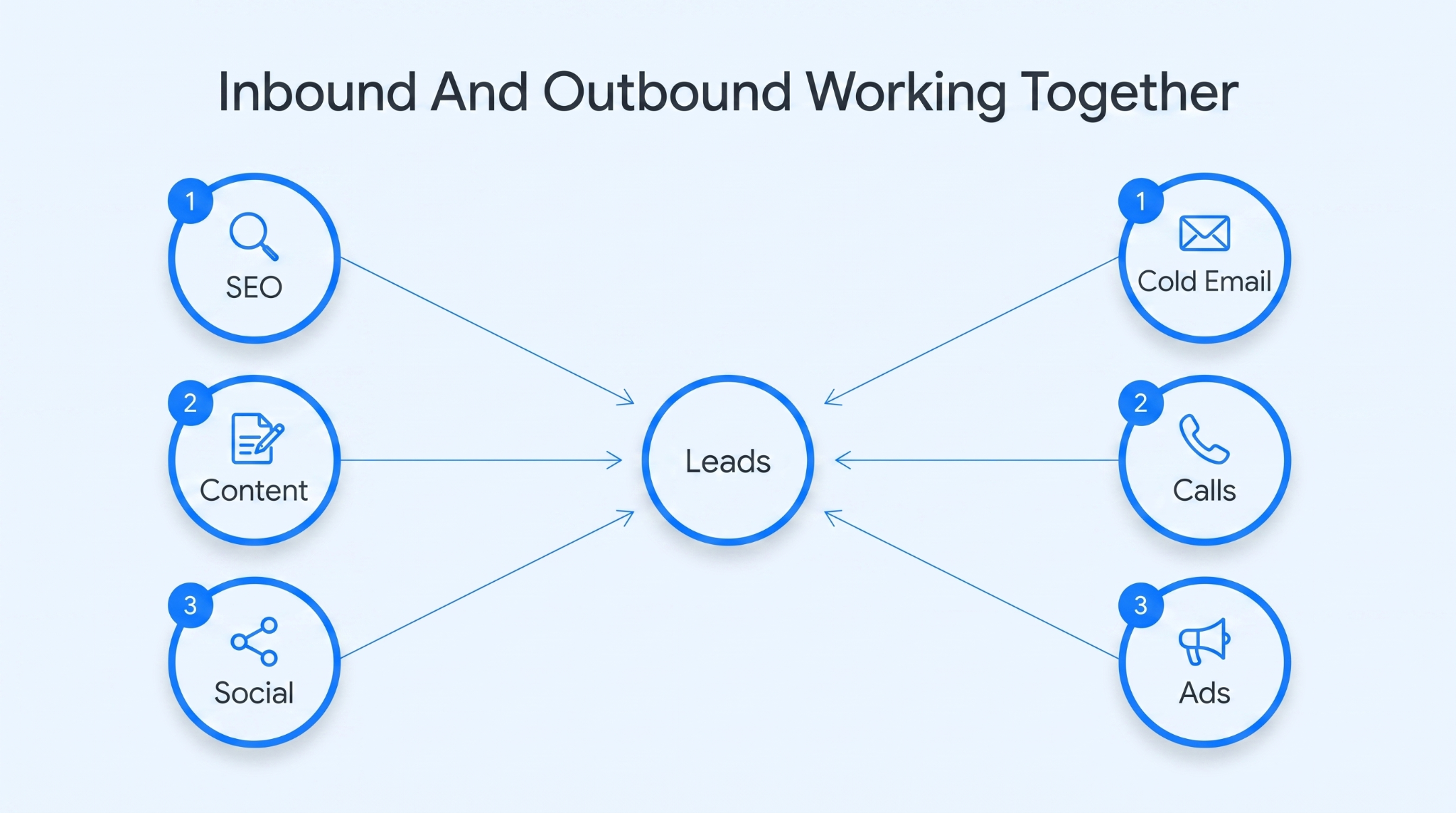
Inbound and outbound prospecting aren't enemies. Inbound pulls people toward you with content marketing and search, which builds trust but takes real patience. Outbound goes out and knocks, getting answers fast but starting stone cold. A steady outbound engine, the kind an SDR team is built to run, keeps things moving whenever inbound goes slow.
Use relevant content and SEO to capture the buyers already searching for you
Layer outbound email and calls on top to reach the ones who aren't
Feed warm inbound leads into outbound follow-up once they show real interest
Let each side warm up the other instead of running them in silos
Most leads aren't ready to buy the day they first find you. They need weeks of gentle follow-up, and doing that by hand across channels for hundreds of people just isn't happening.
Automation keeps every lead warm without anyone having to remember them, so nobody gets forgotten between a first hello and a real chat. It also buys your sales team back the hours they would otherwise lose to manual follow-up, the kind of repetitive work that drags down everyday team productivity.
Trigger follow-up emails automatically from actions like a click or a download
Move leads between CRM stages based on real behavior, not manual updates
Set reminders so hot leads reach a human before they cool off
Build multi-step sequences that automatically pause the instant a lead actually replies
One message for your whole list is a message for nobody. Different buyers want wildly different things. And a campaign trying to please all of them clicks with none. Group your generated leads by what actually sets them apart, and each campaign starts to feel written for that exact group, which is when your open and response rates finally climb.
Segment by industry or the specific pain point each buyer is trying to solve
Build a separate campaign track for each segment that genuinely matters to revenue
Lead every segment with the one benefit that group cares about most
Re-segment leads as they act, since behavior beats static demographics every time
Segmentation earns its stripes hardest when one catalog serves buyers chasing completely different outcomes. Think of an online store where one customer wants sharper focus, and the next wants deeper sleep. Same store, same shelves, but two people who couldn't care less about each other's goals.
Send them both the same bestseller email, and most just shrug because it is pushing something they never asked for. Supplements are the perfect example, and a site like this online nootropics store shows how it is done. Its top-sellers page doesn't dump one giant list on you. It sorts the same bestsellers by goal instead.
So the cognition crowd sees Lion's Mane and Alpha GPC, while the people chasing calm see magnesium and adaptogens, each one backed by review counts and lab results doing the quiet convincing.
The mistake a store like that could easily make is mailing everyone the same monthly promo. Do that, and the focus buyers scroll past sleep products they will never touch, while the whole list slowly tunes the emails out.
The fix is to add the segments right into the campaigns, so the memory buyers hear about memory and the sleep buyers hear about sleep, with their own clicks sorting them further over time. Get it right, and a catalog that was generic suddenly becomes hand-picked. It works anywhere interest, not job title or income, decides what someone actually wants.
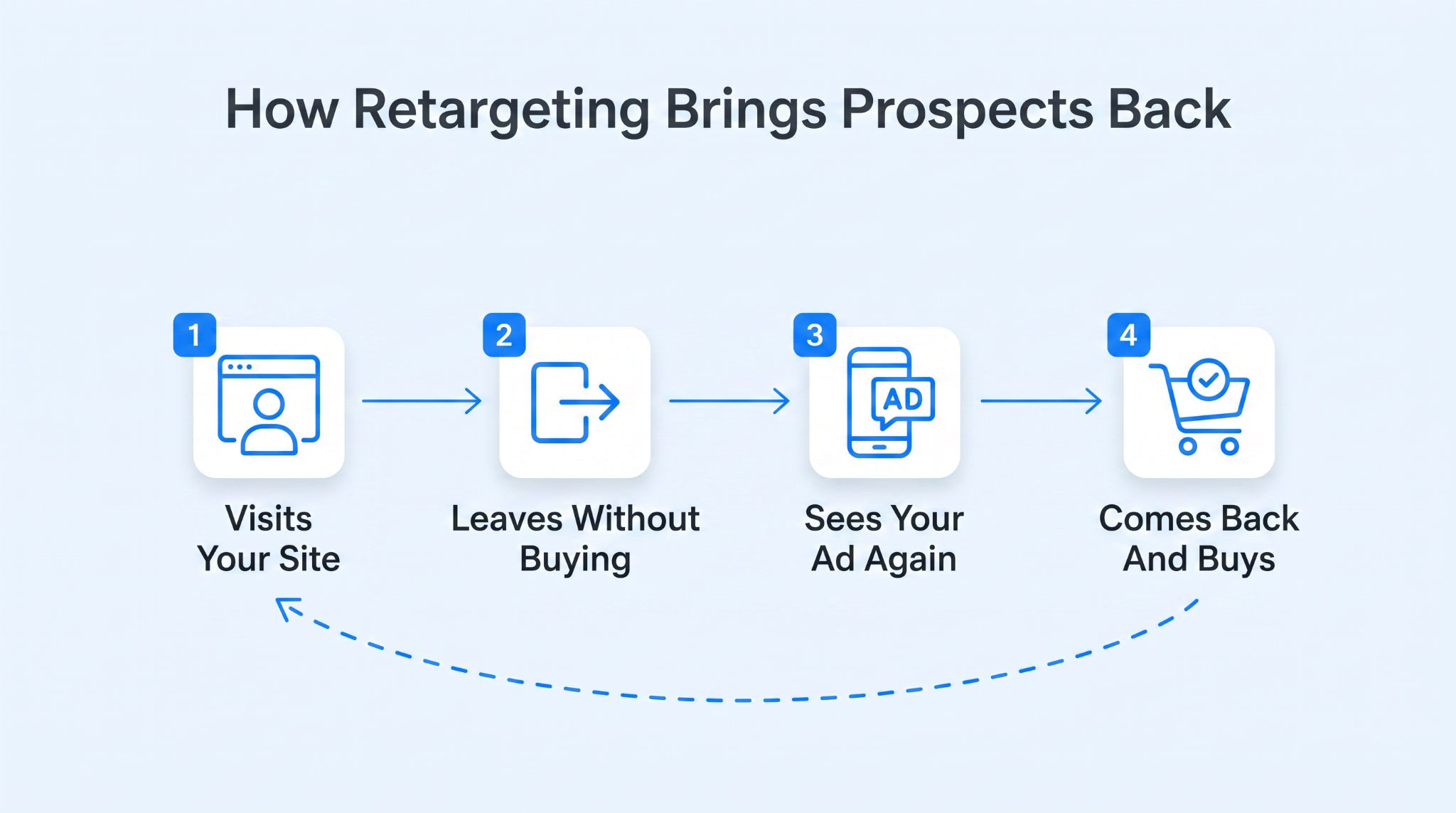
Most people who check you out leave without lifting a finger, and they are not coming back on their own. Retargeting is how you stay in their eyeline after they wander off, popping up in a feed or a search result with a little reminder. Without it, all that traffic you fought so hard for just evaporates.
Tag every site visitor so you can reach them again across multiple platforms
Show different ads based on the exact pages each prospect actually viewed
Cap how often your ads appear so your retargeting never turns into a nuisance
Retarget across at least two separate platforms, not just the one they left
Retargeting matters most when the thing you are selling takes real thinking to buy. For anything people research first, the decision never happens in one visit. They read up, then close the tab to sit with it, and weeks can slide past.
Nudge them nowhere, and that hard-won visit is simply gone, so they end up buying from whoever stayed in front of them. The bigger the decision, the more that quiet stretch decides who wins.
Take this online store selling home water filters. It is exactly the kind of considered buy where one visit rarely closes. Nobody buys a filtration system on impulse. A shopper researches how well a system removes contaminants and whether it even fits under their sink, then leaves to think it over. That research you can see is precisely what you retarget against.
The trap is treating that first visit as your only shot. It isn't. Chase those researchers with the exact thing they were weighing, like the model they compared, right across the feeds and searches they use next.
Bring them back with an answer to the worry that made them pause, and the slow, considered purchase finally closes. It works best for higher-ticket, research-heavy eCommerce, where weeks pass between the first click and the order.
Organic and paid each cover the other's blind spot. Organic builds a steady and trusted presence that keeps paying off long after you stop spending, but it is slow to build. Paid flips on instant visibility, but the second your budget runs dry, so does the traffic. Ride just one, and you are either invisible early or broke later.
Use valuable and informative content to build authority you can point paid traffic at
Run paid ads to capture urgent demand organic can't rank for yet
Test new messaging cheaply with targeted ads, then build organic content around winners
Shift budget between the two as your seasons and real demand change
This balance gets do-or-die in businesses where demand spikes hard and fast. Some services rise and fall entirely on timing. Things stay quiet for months, then blow up the week something breaks, and the customer needs help right now.
Local home services are the obvious case, and someone like this air conditioning installation company in Atlanta, GA says it all. Working Georgia summers that push into the 90s, it watches demand lurch from dead quiet to chaos and back with the thermometer.
When a family's AC quits mid-heatwave, it is a genuine emergency, and whoever shows up first in search wins the job. Organic simply can't switch on that fast. So the strategy is to run them as a pair. A steady blog and strong local reviews build the trust people want before handing over a big install, and they carry the slow winter months when nobody is panicking.
Then paid search steps in over summer to win the urgent nearby searches organic can't rank for overnight. Organic owns the calm, paid owns the spikes. It is essential for any local service with urgent, seasonal demand.
Run 5 channels without tracking the results, and you have got no clue which two are actually getting clients. You just feel busy. Without one place to see all valuable insights at once, you keep feeding different channels that look lively but never convert… and starving the ones actually closing deals.
What you can't measure across channels, you can't fix. And it is exactly how teams end up celebrating vanity stats and racking up more booked meetings while closing fewer deals because nobody is tracking what turns into real revenue.
Pull every channel's data into one shared dashboard, not 10 scattered browser tabs
Follow each lead's full path so you credit the channels that really helped
Track your true cost per client by channel, not just clicks and opens
Review the numbers every month and move budget toward whatever actually converts
The difference between these 3 concepts genuinely changes how you run things. Quick version before the table: it all comes down to how connected your channels really are.
| Term | What It Means | The Experience |
| Multichannel | Several channels, each run on its own | Consistent, but siloed |
| Cross-channel | Channels that hand off to each other | Connected, partly joined up |
| Omnichannel | Every channel sharing one live view of the lead | Smooth and fully unified |
Most businesses kick off at multichannel, and honestly that is fine. It is already a big jump from one channel. Moving to cross-channel and eventually omnichannel just means connecting those channels together so a lead's history follows them everywhere, instead of every channel treating them like a total stranger.
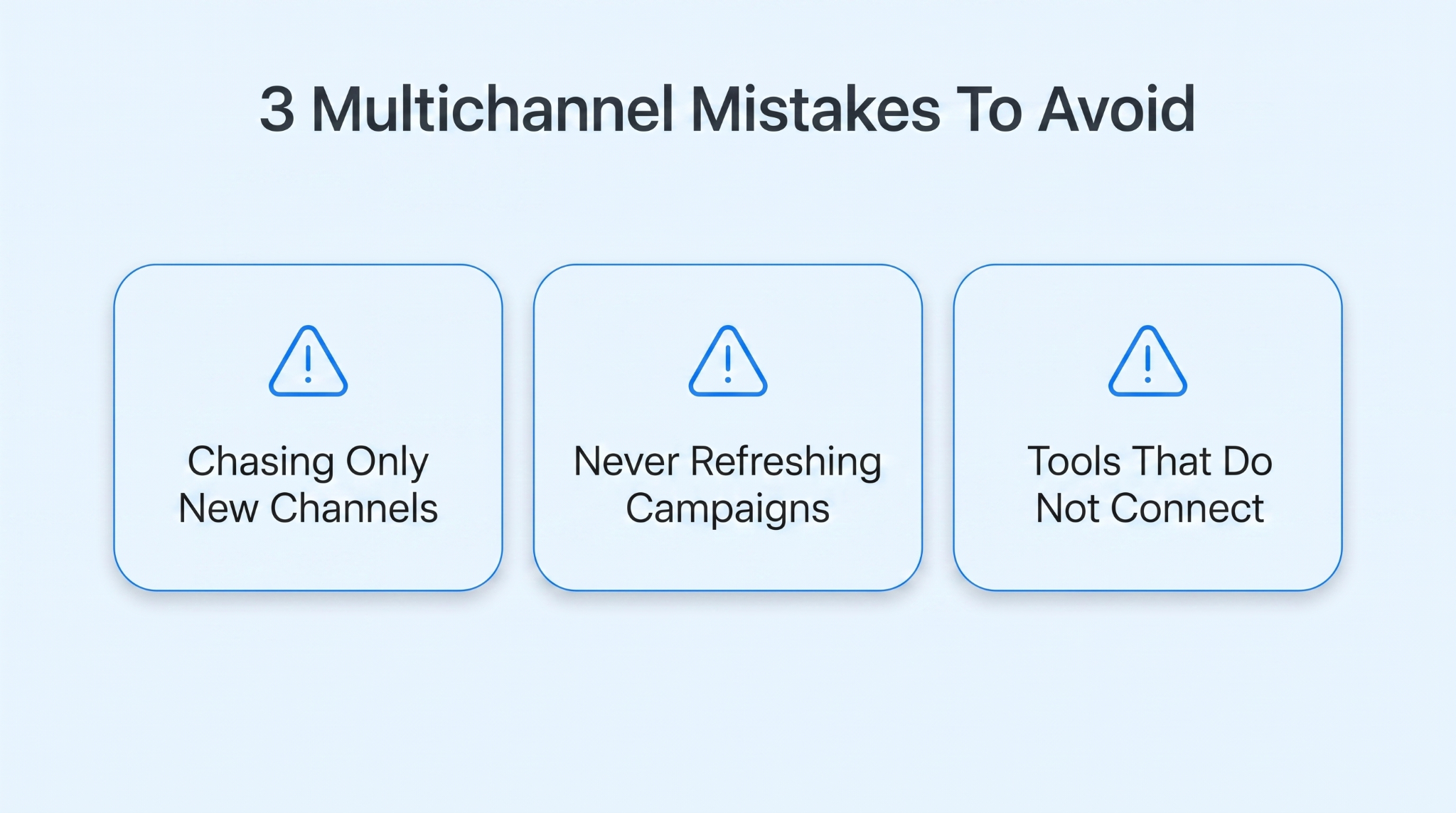
Even a decent multi-channel approach gets destroyed by a few bad habits. Dodge these three, and you are already ahead of most of the field.
There is always a pull toward the next shiny channel, the app everyone is suddenly raving about. So teams keep adding on new ones while the channels already working get ignored and left to rot. Chasing novelty pulls you in too many directions and kills the momentum you had built where things were actually converting.
How to Fix: Get your 2 or 3 core channels genuinely humming before you even think about a fourth. When you do try something new, run it as a small side experiment next to your winners, not a swap for them.
Coasting is where good campaigns go to die. The email that worked brilliantly 6 months ago now gets ignored because your target audience has seen it a hundred times and the market has moved on. Worn-out creative and tired offers keep chugging along on autopilot and dragging your numbers down while everyone assumes the channel itself gave up.
How to Fix: Set a recurring reminder to actually review every live campaign on a schedule. Rotate the creative and refresh the offer regularly, then kill whatever is clearly worn out before it drags the rest down.
Every channel you add tends to bring its own tool, and before long, you are managing a dozen that don't connect. Leads get logged in one and emailed from another, tracked nowhere consistently. That sprawling web of disconnected tools means duplicate records and hours lost copying data between apps.
And the mess isn't just a systems problem. It creates extra work for the people using those systems, too. 38% of workers report difficulty keeping up with technological changes in the workplace, so adding another disconnected platform can mean more training and more chances for important lead information to get missed.
How to Fix: Pick tools that natively plug into each other, or run everything through one CRM as your single source of truth. Before you add anything new, check it connects to what you already have, so your data stays in one place.
If you take just one thing from all this, make it this. Multichannel lead generation isn't about being everywhere at once. It is about picking the right few channels, then linking them together so each touch builds on the last. Do that, and you stop chasing leads one channel at a time and start pulling them in from every direction.
That kind of coordination is exactly why we built Anyleads. From finding and verifying leads to running multi-step email sequences that still feel personal, it pulls the complicated moving parts of multichannel into one place, on a single subscription. If you would rather spend your time closing than wrangling 10 disconnected tools, start now.
 AI tools to find & convert leads.
  Send emails at scale